Saturday, March 11, 2017

Barack Obama-appointed US attorney fired after refusing calls from Donald Trump's administration to resign

Role 'will forever be the greatest honour of my professional life,' says prominent prosecutor

Go to Original
By Harriet Agerholm & Chris Stevenson
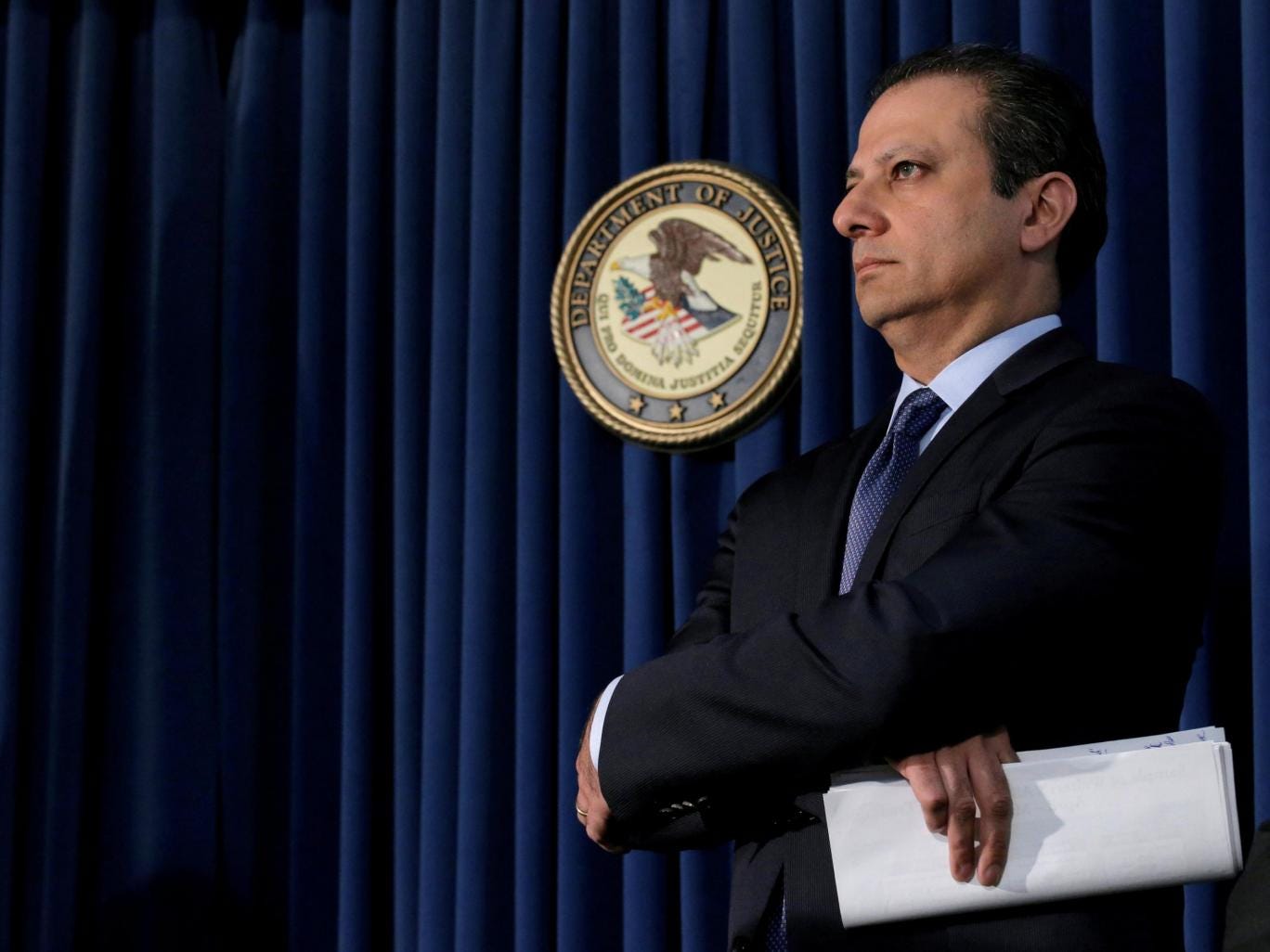


An outspoken New York federal prosecutor known for fiercely railing against public corruption has been fired after he refused an order from Donald Trump's administration to stand down.
It emerged on Friday that Attorney General Jeff Sessions wasseeking the resignations of 46 US attorneys who served under the leadership of Barack Obama.
However, US Attorney Preet Bharara refused to resign, announcing on Twitter on Saturday that he was instead sacked from his position.
"I did not resign," he said. "Moments ago I was fired. Being the US Attorney in SDNY will forever be the greatest honour of my professional life."
His dismissal comes months after he met with the President at Trump Tower, telling reporters afterwards the president had asked him to stay on and he was intending to do so.
Many of the federal prosecutors who were nominated by Mr Obama had already left their positions before the request, but some had stayed on in the first weeks of the Trump administration. 
Justice Department spokeswoman Sarah Isgur Flores said on Friday the forced resignations were necessary “in order to ensure a uniform transition”.
“Until the new US attorneys are confirmed, the dedicated career prosecutors in our US attorney's offices will continue the great work of the department in investigating, prosecuting and deterring the most violent offenders,” she said in a statement. 
Within hours of the order, US attorneys around the country — including in New Jersey, Rhode Island, Minnesota and Montana — had publicly announced their resignations. 
Although it is customary for the 93 US attorneys to leave their positions when a new President enters the office, the changes do not usually happen all at once. Mr Sessions lost his position as US attorney for the Southern District of Alabama in a similar sweep by then-Attorney General Janet Reno in 1993.
Questions about Mr Bharara were directed to the Justice Department by the White House on Saturday.
Mr Bharara was appointed by Mr Obama in 2009. In frequent public appearances, Mr Bharara has decried public corruption after successfully prosecuting over a dozen state lawmakers, Democrats and Republicans alike. 
One US attorney appointed by President George W Bush – Rod Rosenstein of Maryland – remained in his position for the duration of the Obama administration. 
A Justice Department spokesman, Peter Carr, said Mr Trump has asked Rosenstein and Acting Deputy Attorney General Dana Boente, who has served as US attorney for the Eastern District of Virginia, to stay on. 
Tim Purdon, a former US attorney for North Dakota in the Obama administration, recalled that President Barack Obama permitted Bush appointees to remain on until their successors had been appointed and confirmed.
“The way the Obama administration handled it was appropriate and respectful and classy,” he said. “This saddens me because many of these people are great public servants and now they are being asked to leave.”
Montana's US Attorney Mike Cotter said he received a phone call from Acting Attorney General Dana Boente telling him “the president has directed this". 
“I think it's very unprofessional and I'm very disappointed,” he said. “What happened today on Friday, March 10, that was so important that all Obama appointees who are US attorneys need to be gone?” 
“I gotta write that [resignation] letter. It's going to be a one-liner,” he added. 
New York Senator Charles Schumer, a Democrat, said in a statement last week that he was “troubled to learn” of the resignation demands, particularly of Mr Bharara, since Mr Trump called him in November and assured him that he wanted Bharara to remain Manhattan's top federal prosecutor. 
Mr Schumer said that by requesting immediate resignations, Mr Trump was “interrupting ongoing cases and investigations and hindering the administration of justice.” 
Mr Bharara, who was once lauded on the cover of Time magazine as the man who is “busting Wall Street” after successfully prosecuting dozens of insider traders, has in the past few years set his sights on prosecuting over a dozen state officeholders — Democrats and Republicans — including New York's two most powerful legislators. 
The request from Mr Sessions came as Bharara's office is prosecuting former associates of Democratic Govenor Andrew Cuomo in a bribery case. Also, prosecutors recently interviewed New York City Mayor Bill de Blasio as part of a probe into his fundraising. The mayor's press secretary has said the mayor is cooperating and that he and his staff had acted appropriately. 
Mr Sessions' decision to include Mr Bharara's name on the list of resignations of holdovers from the Obama administration surprised Manhattan prosecutors and other political figures. 
New York State Assemblyman Steven McLaughlin, a Republican, had urged Mr Trump and Mr Sessions to reconsider. “Big mistake,” he wrote on Twitter.
Definitely not a wise move at all if @USAttyBharara was asked to resign. This should immediately be reconsidered by AG Sessions. Big mistake
The request for resignations came just days after Mr Trump claimed that Mr Obama tapped his telephones during last year's election. FBI Director James Comey privately asked the Justice Department to dispute the claim because he believed the allegations were false. Mr Bharara worked for Mr Comey when he was US attorney in Manhattan under President George W Bush.

How a Crazy Idea About Islam Went From the Fringe to the White House

"Ladies and gentlemen, we have to recognize that Islam is not a religion."


Go to Original
By 


Earlier this month, National Public Radio's Steve Inskeep asked Sebastian Gorka, the deputy assistant to Donald Trump, whether the president believes Islam is a religion. Rather than answering the question, Gorka lambasted the Morning Editionhost. "It would be nice if you actually reported things accurately," Gorka responded. "This is not a theological seminary. This is the White House. And we're not going to get into theological debates. If the president has a certain attitude to a certain religion, that's something you can ask him."
Gorka went on to say that the United States is not at war with Islam: "That would be absurd." Yet Gorka's refusal to answer Inskeep's simple question was telling, as was his insistence on reframing any discussion of Islam in political and ideological terms. "We're talking about national security and the totalitarian ideologies that drive the groups that threaten America," he said.
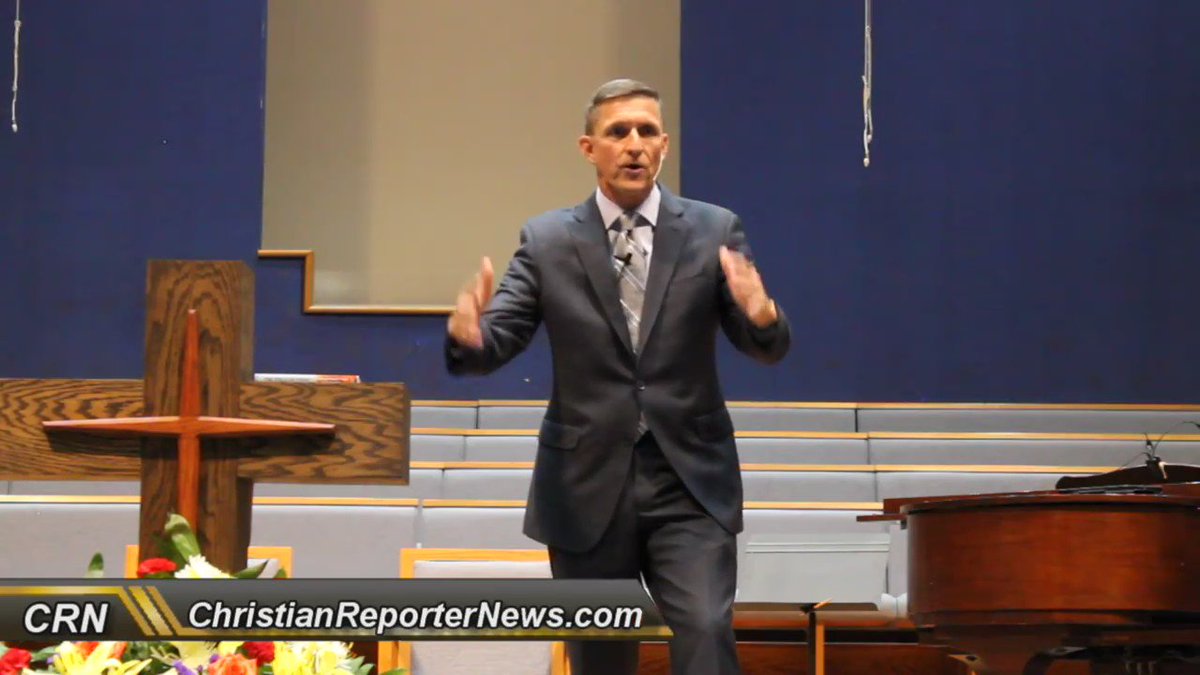
Gorka's evasive comments nodded to a fringe concept that's been floating for more than a decade: the idea that Islam is not a legitimate religion, but a dangerous political ideology. This idea has gained new currency as Trump has elevated some of its adherents to the highest levels of his administration. At a conference last summer, Lt. General Michael Flynn, who would become Trump's initial pick for national security adviser, told an audience, "I don't see Islam as a religion. I see it as a political ideology that…will mask itself as a religion globally, and especially in the West, especially in the United States, because it can hide behind and protect itself by what we call freedom of religion." (Flynn resigned last month after lying about his contacts with Russia.)
Last July, Steve Bannon, the former head of Breitbart who is now the president's chief strategist, told Mother Jones that Islam is "a political ideology." Previously, Bannon had mocked former President George W. Bush for calling Islam "a religion of peace," and suggested that there is an "existential war" unfolding between Islam and the West.
"They lost some credibility and respect in Republican circles—until Donald Trump came around. He gave them the biggest platform they ever could have imagined."
Bannon's us-versus-them rhetoric echoes the argument articulated by Samuel Huntington in his controversial 1996 book, The Clash of Civilizations and the Remaking of the World Order. In it, Huntington described a world split along "fault lines" between "hostile" rival civilizations, of which the "Islamic civilization" is the most troublesome. That narrative took hold among conservative evangelicals and the far-right fringe following the September 11 terror attacks. The recent strain of Islamophobia taps into long-standing Western stereotypes about and prejudices against Islam, says Khaled Beydoun, an associate professor at the University of Detroit Mercy School of Law who studies the intersection of race, religion, and citizenship. These orientalist views portray the Muslim world as a separate civilization, inferior to the West, and inhabited by a monolithic religious and political group. "These tropes, these stereotypes, continue to feed how Muslim identity is shaped and framed by Islamophobes today," Beydoun says. "You see this framing adopted by Trump, and more importantly, the brain trust he has around him."
Painting the Muslims in such broad strokes feeds into the idea that Islam is not a true religion but rather something akin to a totalitarian cult. In 2002, the Reverand Jerry Falwell declared the prophet Mohammad a "demon-possessed pedophile." In 2007, Christian Broadcasting Network founder Pat Robertson said, "Ladies and gentlemen, we have to recognize that Islam is not a religion. It is a worldwide political movement meant on domination of the world. And it is meant to subjugate all people under Islamic law." In 2010, former Lt. General Jerry Boykin, then the executive vice president of the Family Research Council, stated that Islam "should not be protected under the First Amendment, particularly given that those following the dictates of the Quran are under an obligation to destroy our Constitution and replace it with Sharia law."
 Choice for National Security Adviser Michael Flynn: Islam is a political ideology that hides itself behind what they call a religion.
"I think you see an alignment of these very right-wing Christian elements like Boykin viewing Islam as an illegitimate religion—they view the religion as not being a bona fide faith that should be protected by the First Amendment—aligning with nonreligious figures like Michael Flynn, who wrote this book Field of Fight," says Beydoun. In his 2016 book, Flynn wrote, "We're in a world war against a messianic mass movement of evil people, most of them inspired by a totalitarian ideology: Radical Islam."
Another step toward the idea that Islam is not a religion is the notion that there is no such thing as peaceful Islam. David Yerushalmi, general council of the Center for Security Policy, once wrote, "Islam was born in violence; it will die that way." He also scoffed at Bush for his "ideological whim to build democracies among a ruthless people who believe in a murderous creed falsely labeled a 'religion of peace.'" In 2010, Bannon, echoed these remarks, saying, "Islam is not a religion of peace. Islam is a religion of submission." Robert Spencer, the director of the Islamophobic site Jihad Watch, wrote a book on the topic: Religion of Peace? Why Christianity Is and Islam Isn't.
"There is this framing of Islam as less a legitimate religion, the position that Islam isn't a religion in the way we understand Judaism or Christianity or Hinduism, that it's more political in nature, and that Muslims must be viewed as political actors who are following the dictates of this political ideology," Beydoun says. "And if you buy that premise, the next step is, 'These individuals don't deserve the same kind of protections that Jews, Hindus, Christians, and so on do.'"
Trump stated that the United States will have "absolutely no choice" but to shut down mosques because "some bad things are happening."
In 2011, shortly after the controversy over the so-called Ground Zero mosque and the spread of a conspiracy theory that Shariah was taking over America, the Center for American Progress published a lengthy report titled "Fear Inc.," which documented what amounted to a cottage industry of Islamophobic misinformation. Prominent players include Act for America, a "national security" group that currently boasts Flynn as a board member. Another is Frank Gaffney, the founder of the Center for Security Policy, which has pushed the unlikely notion that Islamists are secretly trying to infiltrate the American government and prominent organizations—including the National Rifle Association—through a process he calls "civilization jihad."
"These were people who were always on Fox News, being cited on Pamela Geller's blog, who were always on Sean Hannity, the Christian Broadcast Network, the National Review, and others," says Faiz Shakir, the national political director of the American Civil Liberties Union and one of the authors of the report. (Pamela Geller writes a prominent anti-Muslim blog.) "You had major political groups who were then taking this and getting it into the mouths of lawmakers. At that time it was Allen West, Herman Cain, and Michele Bachmann. We went through a period where we had really fought back and marginalized some of these voices," says Shakir. "They lost some credibility and respect in Republican circles—until Donald Trump came around. He gave them the biggest platform they ever could have imagined."
This network also had links with what would become Trump's inner circle. Gaffney appeared on Bannon's radio show 34 times. Gorka, a former Breitbart editor, has regularly appeared at Center for Security Policy events and on Gaffney's own radio program. Gaffney once defended the disgraced former FBI agent turned anti-Muslim crusader John Guandolo—who has said that mosques in the United States "do not have a First Amendment right to anything" and has helped draft anti-Muslim legislation.
Trump himself has expressed some of the key tenets of the Islamophobic right. In late 2015, Trump proposed a total ban on Muslims entering the country, justifying the idea by citing a debunked survey commissioned by Gaffney's Center for Security Policy and conducted by Kellyanne Conway, who would become Trump's campaign manager. The survey claimed that 51 percent of those polled believe that Muslims in America should have the choice to be governed by Shariah, and a quarter agreed that violence against Americans in the United States "can be justified as part of the global jihad." A few weeks earlier, he stated that the United States will have "absolutely no choice" but to shut down mosques because "some bad things are happening."

There have already been previous efforts to prevent mosques from being built using the "Islam is not a religion" argument. "Those are all real efforts," says Shakir. "They have been on the back burner and bubbling up for a long time, and now they have people in positions of power who can effectuate these radical ideologies that they've long held on to." Until Trump provides some clarity on his true views, people on both sides of the issue may assume that he is unwilling to publicly state that Islam deserves the same legal status and protections as other religions.

Trump’s War on the Truth Tellers

Go to Original
By ROBERT B. REICH

Trump and his White House don’t argue on the merits. They attack the credibility of the institutions that come up with facts and arguments they don’t like. 
They even do it preemptively. Last week, White House press secretary Sean Spicer warned that the nonpartisan Congressional Budget Office couldn’t be trusted to come up with accurate numbers about the costs and coverage of the Republican’s replacement for the Affordable Care Act.
“If you’re looking at the CBO for accuracy, you’re looking in the wrong place,” he said.
So what’s the right place? The Oval Office? 
Bear in mind the director of the CBO is a Republican economist and former George W. Bush administration official who was chosen for his position by the Republican Congress in 2015. 
No matter. The White House is worried about what the CBO will say about Trumpcare, so it throws the CBO under the bus before the bus arrives. 
Trump couldn’t care less about the long-term consequences, but the rest of us should. For more than four decades the U.S. budget process has depended on the CBO’s analyses and forecasts. The office has gained a reputation for honesty and reliability under both Republican and Democratic appointees. Now, it’s tainted. 
This has been Trump’s MO since he first met a fact he didn’t like. 
When candidate Trump didn’t like the positive employment numbers from the Bureau of Labor Statistics showing the economy improving under the Obama administration, what did he do? He called the official unemployment rate “such a phony number,” “one of the biggest hoaxes in American modern politics” and “the biggest joke there is.”
It’s possible to take issue with the ways the Bureau of Labor Statistics measures unemployment, but why undermine public trust in the Bureau itself?
Of course, when February’s job numbers turned out rosy, Trump’s White House embraced the monthly employment report. But the damage has been done. The BLS looks political.  
Spicer tries to wrap Trump’s institutional attacks in populist mumbo-jumbo: “I think [Trump] addressed that in his inaugural speech when he talked about shifting power outside of Washington D.C. back to the American people because for too long it’s been about stats … and it’s been about, what number are we looking at as opposed to what face are we looking at?”
Rubbish. The only way we can understand the true dimensions of the problems real people face is with data about these problems, from sources the public trusts. But if the credibility of those sources is repeatedly called into question by the president of the United States, there’s no shared truth. 
When Trump disagreed with judicial findings about his original travel ban, he didn’t offer any reasons or analyses. Instead, he called the judge who issued the stay a “so-called judge” and attacked the appellate judges who upheld it as “so political” they weren’t “able to read a statement and do what’s right.” 
When he blamed the intelligence agencies for the downfall of his first national security advisor, he didn’t spell out why. He just attacked them, issuing disparaging tweets with “intelligence” in quotation marks.
When he dislikes press reports, Trump doesn’t try to correct them. He assails the press as “the enemy of the American people,” “dishonest,” purveyors of “fake news,” and “the opposition party,” and questions their motives (they “have their own agenda, and it’s not your agenda, and it’s not the country’s agenda”
When polls show that he has a low approval rating, he doesn’t say he expects the rating to improve. He attacks the entire polling industry, asserting “any negative polls are fake news.”
When scientists come up with conclusion he disagrees with, he doesn’t offer other credible sources of scientific data. He attacks science.
Trump thinks climate change is a hoax. His new head of the Environmental Protection Agency asserted last week that climate change isn’t caused by human activity.
What does the Trump administration do to prove the point? Nothing. Instead, it tells EPA staffers to remove pages from the EPA’s website concerning climate change, and threatens to review all the agency’s data and publications, and cuts the budgets of all scientific research in government.
Trump’s big lies are bad enough because they subvert the truth and sow confusion. But Trump’s attacks on the institutions we rely on as sources of the truth are even more dangerous, because hey make it harder for the public to believe anything. 
In a democracy, the truth is a common good. Trump is actively destroying the truth-telling institutions our democracy depends on.  

Right-Wing Billionaires Have a Project Going to Rewrite Our Constitution, and They Are Shockingly Close to Pulling It Off

A few years ago, it would have been a thought experiment; now it's nearly reality.

Go to Original
By Thom Hartmann

Imagine if the U.S. Constitution barred the EPA and Department of Education from existing. All union protections are dead, there are no more federal workplace safety standards, and even child-labor laws are struck down, along with a national minimum wage.
Imagine that the Constitution makes it illegal for the federal government to protect you from big polluters, big banks and even big food and pharma—all are free to rip you off or poison you all they want, and your only remedy is in state courts and legislatures, because the Constitution prevents Congress from doing anything about any of it. The federal government can't even enforce voting or civil rights laws.
To add injury to insult, the federal government has to shut down Social Security, Medicare and Medicaid, because all of these programs (along with food stamps, housing supports and any programs that help the middle class, the less fortunate or disabled) are “beyond the reach” of what the federal government can do.
A few years ago, it would have been a thought experiment; now it's nearly reality. Billionaires and the groups they fund are working to rewrite our Constitution to provide corprations and the rich with more and more protections and benefits, and chop away at anything smelling of “socialism” like Social Security or child labor laws. 
The fact is that they're just a few states away from meeting their goal, and have already held dress rehearsals in Washington D.C.—with representatives from all 50 states—for a Constitional Convention that would change America forever.
The Constitution (arguably) provides for three ways to change or amend itself. The first is that Congress can propose a constitutional amendment, pass it with a supermajority in both houses, and have three-quarters of the states ratify it. This is the way it's been done for every one of the existing 27 amendments.
The second strategy is done by using Article 5 of the Constitution and driving the process up from the states. The easiest way to do this is for three-quarters of the states to legislatively approve (with majority votes in each state) an amendment, in which case Congress is unnecessary and upon ratification by the 38th state, it becomes a permanent amendment to the Constitution.
While this strategy has never been used, it's why many of the good government groups like Move To Amend and Public Citizen are pushing for a “Corporations are not people, and money is not speech” amendment.
The third—and incredibly dangerous—strategy to amend the Constitution is to simply call a “Convention of the States,” again using Article 5, and open the entire document itself up to rewriting and tinkering through the brute-force method of multiple amendments that can effectively rewrite any part of the Constitution.
This third strategy is the one being used right now, as you're reading these words, in a very well-funded effort by right-wing oligarchs. If they can pull it off in the states (where it's cheaper to buy politicians), then Congress, the president and even the courts would have no say over it.
Their goal appears to be to put into the Constitution specific prohibitions against any programs (from Social Security to Medicare to food stamps) that they've always viewed as “unconstitutional socialism,” and to permanently enshrine in the Constitution the “right” of corporations and billionaires to own politicians and spend unlimited monies to influence elections and ballot measures. It would effectively turn America into a feudal state owned by the people FDR called the "economic royalists."
The group leading this charge is called Citizens for Self-Governance, which SourceWatch.org says, "is a right-wing political organization tied to Eric O'Keefe that is campaigning for an Article V convention to amend the U.S. Constitution. Through its 'Convention of States' project, CSG promotes an effort to amend the U.S. Constitution pursuant to Article V, which provides that thirty-four states (two-thirds) can trigger a convention to propose an amendment, which must then be ratified by 38 states (three-fourths)."
They add, “CSG director Eric O'Keefe has deep ties to Charles and David Koch and has been a founder and funder of numerous right-wing groups including Wisconsin Club for Growth,” and the CSG, “through its Convention of States project, is pushing for a constitutional convention in order to severely restrict federal power, for example by redefining the Commerce Clause to prohibit Congress from enacting child labor or anti-discrimination laws, or by adding a balanced budget requirement.”
And they're actually doing it. As Wikipedia notes,
“In December 2013, nearly 100 legislators from 32 states met at Mount Vernon to talk about how to call a convention of states. … In February 2014, U.S. Senator Tom Coburn announced that after his retirement from Congress, he would focus on promoting the Convention of States to state legislatures.
“In December 2015, Marco Rubio endorsed CSG's efforts to a call an Article V Convention. In January 2016, Texas Governor Greg Abbott called for a Convention of States to restrict the power of the federal government.
"As of 2016, CSG's application for a Convention of States has been passed in eight states: Georgia, Florida, Alabama, Alaska, Tennessee, Indiana, Oklahoma, and Louisiana.”
Now that they have mobilized thousands of enthusiastic billionaire-supporting conservatives across the nation, with help from one of America's most widely heard right-wing talk-radio hosts, Wikipedia notes:
“In September 2016, CSG held a simulated convention to propose amendments to the United States Constitution in Williamsburg, Virginia. An assembly of 137 delegates representing every state gathered to conduct a simulated convention.
“The simulated convention passed amendments relating to six topics, including requiring the states to approve any increase in the national debt, imposing term limits, limiting the Commerce Clause to its original meaning [ending minimum wage, federal right-to-unionize, and child-labor laws], limiting the power of federal regulations [aka "consumer protections], requiring a supermajority to impose federal taxes and repealing the 16th Amendment [which legalized federal income taxes], and giving the states the power to abrogate any federal law, regulation, or executive order.”
We've discussed this movie before, although we've never seen it so close to us.
On April 9, 1944, at the height of the war against fascist Germany and Japan, the New York Times published an op-ed by Vice President Henry Wallace discussing explicitly the issue of very wealthy people setting out to take over our government.
Wallace spoke directly to the danger of multimillionaire and corporate power, defining right-wing industrialists as people “who in case of conflict put money and power ahead of human beings.” He added that “in their search for money and power [they] are ruthless and deceitful. ... They... follow power and the dollar wherever they may lead."
In his strongest indictment of that day's equivalent of today's billionaire class, Wallace wrote, "They claim to be super-patriots, but they would destroy every liberty guaranteed by the Constitution. They demand free enterprise, but are the spokesmen for monopoly and vested interest. Their final objective toward which all their deceit is directed is to capture political power so that, using the power of the state and the power of the market simultaneously, they may keep the common man in eternal subjection."
As Wallace's president, Franklin D. Roosevelt said when accepting his party's re-nomination in 1936 in Philadelphia, "out of this modern civilization, economic royalists [have] carved new dynasties.... It was natural and perhaps human that the privileged princes of these new economic dynasties, thirsting for power, reached out for control over government itself. They created a new despotism and wrapped it in the robes of legal sanction."
We stand at the same crossroads Roosevelt and Wallace confronted during the Great Depression and World War II, only this time the Supreme Court (in 1976 with Buckley, 1978 in Bellotti and in 2010 with Citizens United) has given American billionaires the power to spend virtually unlimited amounts of money to own politicians and demand behavior from them so outrageous that they'd even lie on live TV and deny science itself.
The billionaire right's behavior today eerily parallels the day in 1936 when Roosevelt said, "In vain they seek to hide behind the flag and the Constitution. In their blindness they forget what the flag and the Constitution stand for."
President Roosevelt and Vice President Wallace's warnings have come full circle. It's critical that we call out these economic royalists for what they're doing, and not let them and their minions rewrite our Constitution.

Trump's Plan to Gut HUD Threatens the Very Survival of America's Poor

A budget cut of up to $7.7 billion guarantees mass homelessness and premature death.

Go to Original
By Sarah Lazare

Rosemary Holmes has lived in Newark's Terrell Holmes for the better part of six decades. She, like many others in the building, has raised children in its courtyards and hallways, and forged a tight-knit community of friends and neighbors. At the age of 68, she has been forced to band with other tenants to fight local efforts to shutter the facility. Now, as the Trump administration weighs plans to gut the Department of Housing and Urban Development, she has a new battle on her hands.
“Any time they move a person to someplace they don't want to live, it's imprisonment,” she told AlterNet over the phone. “I am a human being, and I deserve to live where I want to live. Us, the ones who really want to be here, we are going to be uprooted because of the sabotage of HUD and the Housing Authority.”
Horsley is one of countless public housing residents across the country directly impacted by news that the Trump administration is mulling whether to slash HUD’s budget by at least $6 billion, or 14 percent, in the 2018 fiscal year. The proposed cuts were revealed Wednesday by Washington Post reporter Jose A. DelReal, who cited “preliminary budget documents” that he had obtained. If implemented, the reductions will hit a federal agency that is already unable to meet the level of human need, thanks to systematic defunding over the course of decades.
Douglas Rice, a senior policy analyst for the Center for Budget and Policy Priorities, a Washington, D.C., think tank, reports that the proposed cuts would, in fact, amount to $7.7 billion dollars, or a 16 percent reduction, in 2018. He arrives at this number by evaluating expected funding levels for 2017, writing: “it’s reasonable to presume that the final budget will be close to the average of the bills the House Appropriations Committee and the full Senate approved last summer.” By contrast, DelReal wrote his story based on 2016 funding levels.
Either way, the cuts are poised to be dramatic. Rice told the Washington Post that 20,000 renters will lose their assistance for every 1 percent slash to the budget of HUD. “The reality is that we’ve been living under these austere budget caps, and budgets like HUD’s have already been pretty much cut to the bone,” Rice said, pointing to the sequestration cuts of 2011. “And when you try to cut below that, you really end up with harmful impacts.”
The proposed cuts would go deep. “Budgets for public housing authorities—city and state agencies that provide subsidized housing and vouchers to local residents—would be among the hardest hit,” writes DelReal. “Under the preliminary budget, those operational funds would be reduced by $600 million, or 13 percent. Funds for big-ticket repairs at public housing facilities would be cut by an additional $1.3 billion, about 32 percent.”
Public housing in the United States already faces a backlog of $26 billion in repairs, according to a 2010 report commissioned by HUD.
The Community Development Block Grant Program, which was budgeted to receive $3 billion this fiscal year, would be entirely slashed if the proposed changes were implemented. While the budget document reportedly suggests that funds for the program “could come from outside the HUD budget as part of a separate White House bill,” it is not immediately clear where exactly such dollars would come from and whether they would be guaranteed. The HOME Investment Partnerships Program, which helps fund local affordable housing, would also be eliminated.
The gutting of HUD would take money directly out of the hands of renters in need. The Post story notes, “Under the proposal, direct rental assistance payments—including Section 8 Housing and housing vouchers for homeless veterans—would be cut by at least $300 million, to $19.3 billion. Additionally, housing for the elderly—known as the Section 202 program—would be cut by $42 million, nearly 10 percent. Section 811 housing for people with disabilities would be cut by $29 million, nearly 20 percent. Money available for Native American housing block grants would fall by $150 million, more than 20 percent.”
According to Rice’s analysis of the Post report, if the cuts go through, “Housing Choice Vouchers that some 200,000 low-income households currently use to pay their rent would be eliminated in 2018.” He explained, “Reducing the availability of this crucial support would increase and prolong homelessness for vulnerable people with disabilities, families with children and others.”
“It should be very clear to our movements, to our communities, and to the entire country that [the] Trump administration is intent on further destabilizing and dismantling programs that our communities rely on tso survive,” Malcolm Torrejón Chu, communications organizer with the Right to the City Alliance and organizer for the National Homes for All Campaign, told AlterNet. “These threatened cuts to housing are threatened cuts to our community survival. And we have no illusions that the current HUD programming is enough.”
The proposed reductions are in line with Trump’s recent claim that he will pay for a $54 billion increase to the war budget in large part by cutting domestic programs.
But long before Trump made this assertion, HUD Secretary Ben Carson—who has no prior experience in housing policy—has been open about his desire to dismantle key public housing initiatives. In 2014, he opposed an agreement between the city of Dubuque and the Department of Housing and Urban Development to address the city’s housing policies that discriminate against black residents, suggesting it was proof America was "becoming communist." In 2015, he vocalized his opposition to a HUD fair housing rule that is aimed, in part, at reducing segregation, calling it a “failed socialist experiment.”
Following the Post report, Carson reportedly sent a letter seeking to reassure staff on Thursday, stating: “Please understand that budget negotiations currently underway are very similar to those that have occurred in previous years. This budget process is a lengthy, back-and-forth process that will continue. It’s unfortunate that preliminary numbers were published, but please take some comfort in knowing that starting numbers are rarely final numbers.”
Yet the fact that such drastic cuts were proposed at all has alarmed those whose housing—and lives—are on the line. Rhonda, who lives in Terrell Homes and did not want her last name to be used, said the immediate impacts of such cuts, if they go through, would be straightforward. “They need to keep public housing, because without public housing, people will be homeless,” she said. “The numbers of homeless people in America will be going up. People will have to choose between housing and food.”
‘They want us out’
Michael Higgins, Jr., an organizer with the Brooklyn-based Families United for Racial and Economic Justice, told AlterNet that news of proposed cuts to HUD didn’t come as a surprise. “There’s been steady cuts in every administration going back to Reagan,” he said. “Because there have been consistent cuts, and because public housing is in such bad shape, there are a decreasing number of options for people in public housing.”
According to a Congressional Budget Office report released in September 2015, federal housing assistance is already falling far short. “Currently, only about one-quarter of the eligible low-income population receives housing assistance through federal spending programs,” the office stated.
Long before the Trump administration’s proposed slash to the HUD budget, Terrell Homes residents were fighting a years-long battle against efforts to shutter their facility. “Since December 2013, there have been attempts to shut it down,” Drew Curtis, the director of community development and environmental justice for the Ironbound Community Corporation, told AlterNet. “Tenants fought back and stopped the initial demolition, but last summer they started trying again to shut down Terrell Homes.”
Curtis said that one of his first thoughts when he found out about the proposed HUD cuts was, “There is going to be even more ammunition for the local housing authority to shut this down. Tenants will need to stay diligent and keep putting on political pressure. The biggest cuts proposed were public housing operating funds and Community Development Block Grants, which often go into housing repairs. This would dramatically affect them.”
Horsley said she is exhausted after fighting a years-long battle to stay in her home. “The whole thing is, they want us out,” she said. “They cannot verbalize and come out and say they don't want the poor blacks, the poor Hispanics, because we no longer fit the new normal.”
Terrell residents are not alone. In a statement released Thursday, the New York City-based CAAAV Organizing Asian Communities said, “The announced proposed cutting of $6 billion to HUD and $150 million funding for NYCHA and Section 8 vouchers is cutting the vein that keeps working-people from being able to keep this City running.”
“While these proposed cuts happen, New York taxpayers have spent $24 million to protect Trump’s private properties from Election Day to inauguration. It is estimated that $127,000 to upward of $308,000 will be spent each day to protect the Trump family at their NYC residence,” the statement continues. “We refuse to let our public dollars be spent to protect the rich’s war machine and unjustly kill millions of innocent Muslim lives around the world. We refuse to let our public dollars police and criminalize black and Latinx communities that fuel the deportation machine.”
Higgins underscored that, “In New York, there was already an extreme crunch of public housing. Over the years, HUD has moved more into a Section 8 voucher scheme, instead of rent being directly paid by the government. When you see Section 8 being taken, it means certain people will be out of their homes.”
Organizers say that it will be important to meet any proposed cuts with a continuation of the robust resistance that has already seen millions take to the streetsmobilize and defend their communities against Trump administration policies.
According to Torrejón Chu, “We are clear that the Trump administration is an administration that is interested in privatization and corporate profits and not people’s actual needs. We need to continue to show and expose that the administration does not represent our communities or the people.”
“We see this as a moment to not just resist cuts, but to put forward a vision of a totally different world,” he continued. “We think it's important that our communities develop and strengthen our vision of an alternative world where we have control over land, resources and housing. A world where housing, land and community aren't commodities. This moment is calling for us to have a vision.”